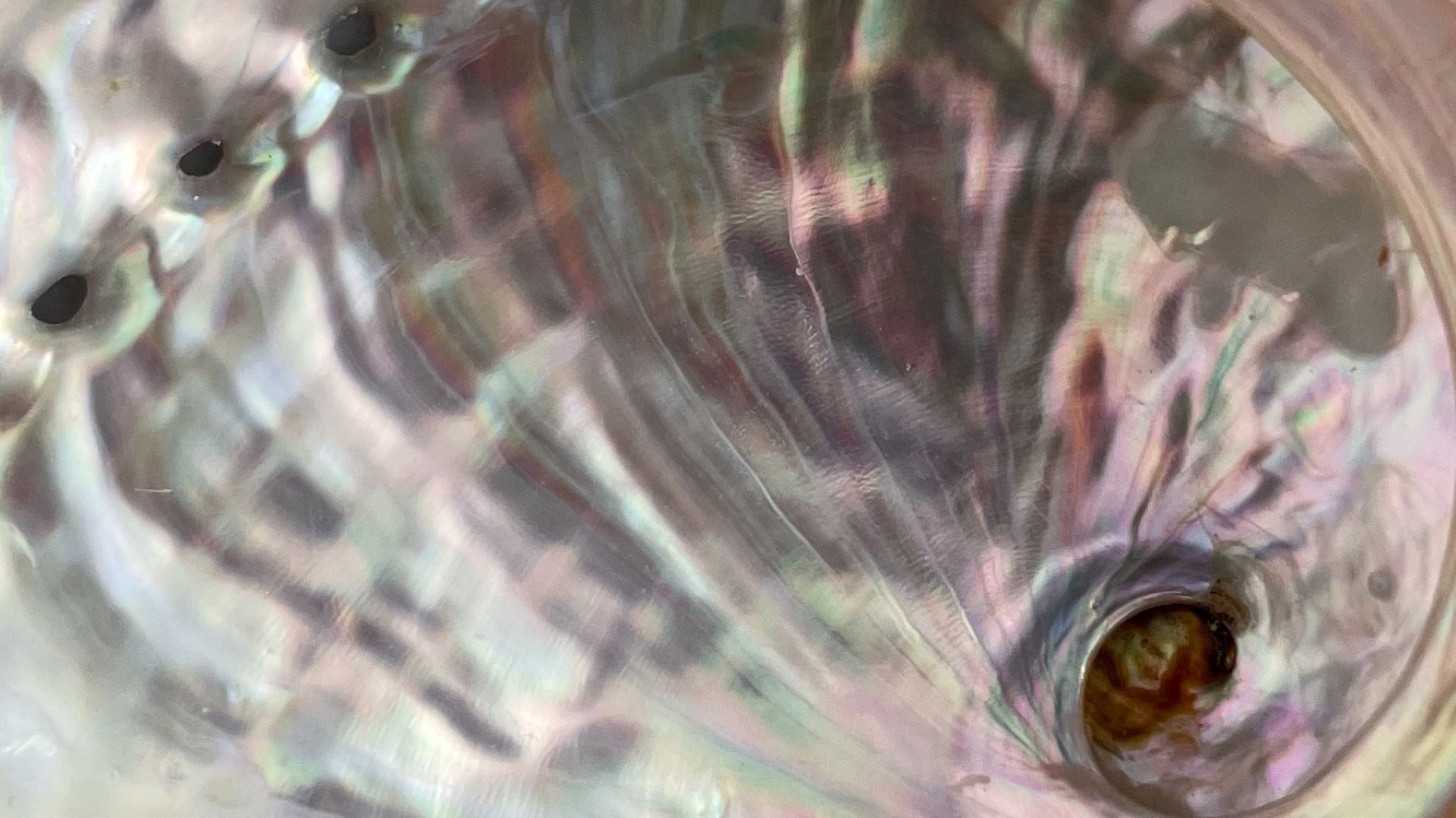
The rocks beneath our feet are leaving a hidden signature in the shells of marine snails along Australia’s coastline, according to new research led by Adelaide University scientists.
A study published in Proceedings of the Royal Society B reveals that neodymium (Nd) isotope ratios in abalone shells reflect the age and type of continental rocks along southern Australia, providing new possibilities for tracking marine animal movement and verifying the origin of seafood.
The research team, led by marine ecologist Associate Professor Zoe Doubleday, analysed neodymium isotope ratios (expressed as ƐNd) in more than 100 abalone shells collected from 11 sites spanning Western Australia to NSW.
The results showed striking geographic differences, with shells from Western Australia recording far more negative ƐNd values than those from eastern Australia.
“These isotope ratios are effectively geological fingerprints,” said Assoc Prof Doubleday.
“What’s remarkable is that the chemical data in the shells reflect the age of the continental crust or land adjacent to where the abalone lived.”
Western Australia’s coastline is dominated by some of the oldest rocks on Earth – dating back billions of years to the Archean eon – while eastern Australia is largely composed of younger geological formations. The team found that ƐNd values in shells shifted predictably from west to east, mirroring this geological transition.
Radiogenic isotopes are widely used to track the movement of terrestrial and freshwater animals. However, their application in marine systems has been limited because commonly used isotope systems, like strontium, are too uniform in the ocean to distinguish regions.
“Unlike strontium, neodymium has a much shorter residence time in seawater,” Assoc Prof Doubleday said. “That means it varies geographically in the ocean, making it far more useful for marine biological applications.”
The study represents the largest analysis to date of neodymium isotopes in modern animal tissues, and the first conducted outside northeast Asia.
Compared with previously published shell data from Japan and China, the same broad pattern emerged: coastlines dominated by ancient geology produced more negative ƐNd values, while younger geological provinces produced fewer negative values.
“This consistency across continents gives suggests that neodymium isotopes can be used as a reliable tracer. It opens exciting possibilities for understanding where marine animals have lived, fed or migrated.”
Beyond ecological research, the findings could have practical applications for fisheries management and seafood authentication.
“If we can link a shell or tissue sample back to a specific geological region, that gives us a powerful tool for verifying provenance. Geology is about the most permanent and stable driver of isotope variation that you can get in this field, which makes it a beautiful thing to work with” Assoc Prof Doubleday said.
“It could help regulators, industry and consumers ensure products are genuinely sourced from where they claim to be.”
The researchers note that neodymium occurs in very low concentrations in biological tissues, making analysis technically challenging. However, advances in mass spectrometry now allow highly precise measurements from smaller samples.
While further work is needed to better understand how different marine species incorporate neodymium, the study demonstrates that ƐNd offers a predictable, geology-driven chemical marker with minimal biological distortion.
“Radiogenic isotopes have transformed research on land, and we believe that neodymium could become just as indispensable in the marine realm – helping us to trace movement, protect vulnerable species, and safeguard the authenticity of valuable marine products.”
‘The geological imprint of neodymium isotopes in marine gastropods’ is published in Proceedings of the Royal Society B. DOI: https://doi.org/10.1098/rspb.2025.1652